Platforms are everywhere. Designing them is not.
Much of how business works today runs through platforms: marketplaces, networks, cooperatives, ecosystems of partners building on each other. We can model the organisation that runs a platform — its teams, roles and decisions, as organisational modelling does. But that describes the business behind the platform, not the platform itself.
Platforms create value in a peculiar way. They do not make the value; they make it easier for others to exchange it — and to learn and grow while they do. Who produces, who consumes, which transactions matter, which services lower their cost, what makes the network more valuable with every new member: that is a design of its own.
The Platform Design Toolkit by Boundaryless gives this design a method and a model: phases, steps and a canvas for each. But on paper and whiteboards, the canvases drift apart as the design evolves — the entity on one canvas is renamed on another, a transaction has no channel, the learning engine forgets a role.
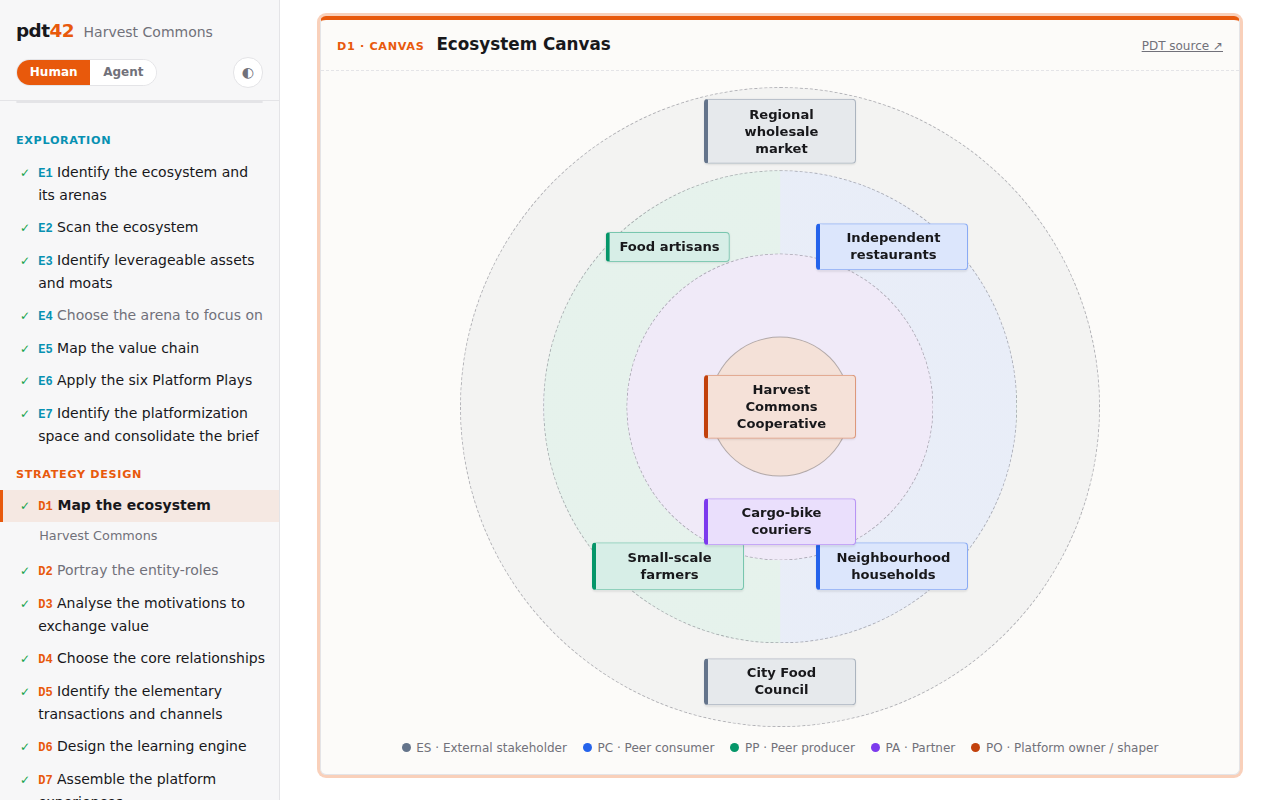
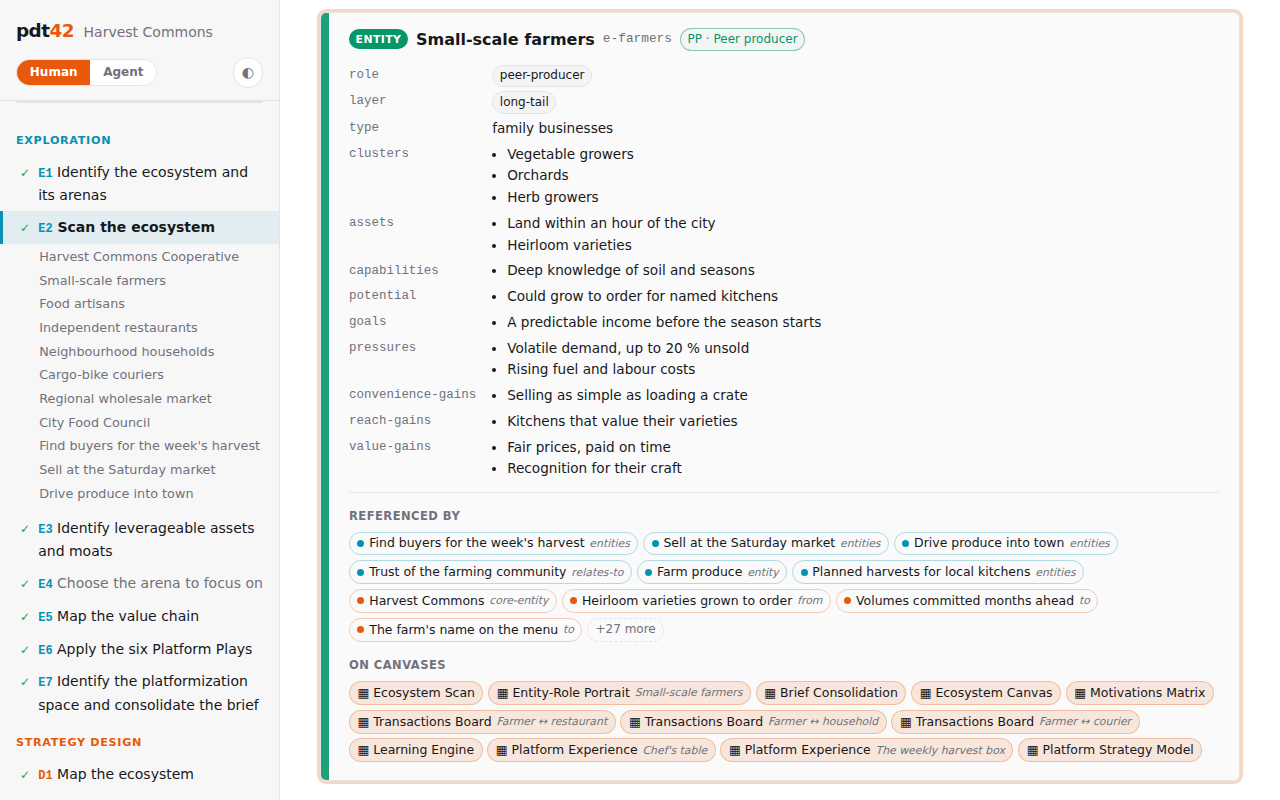
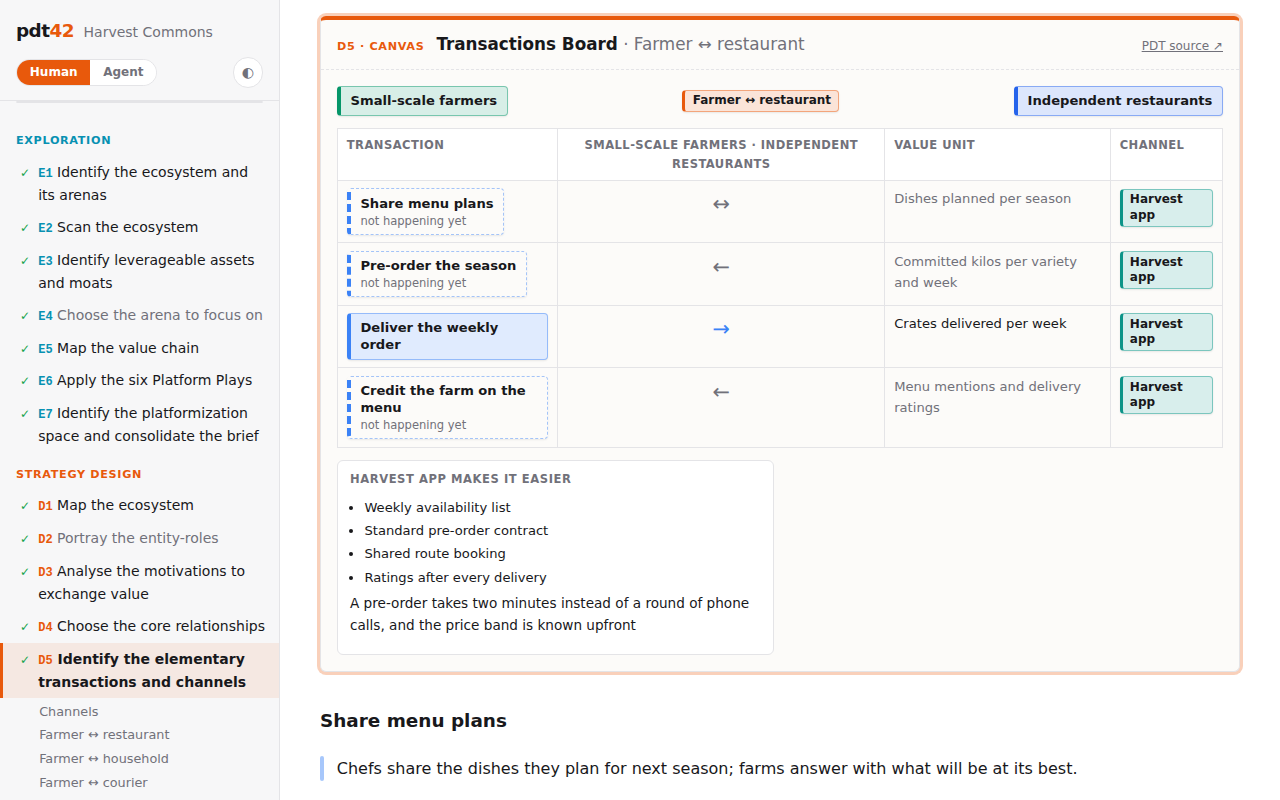
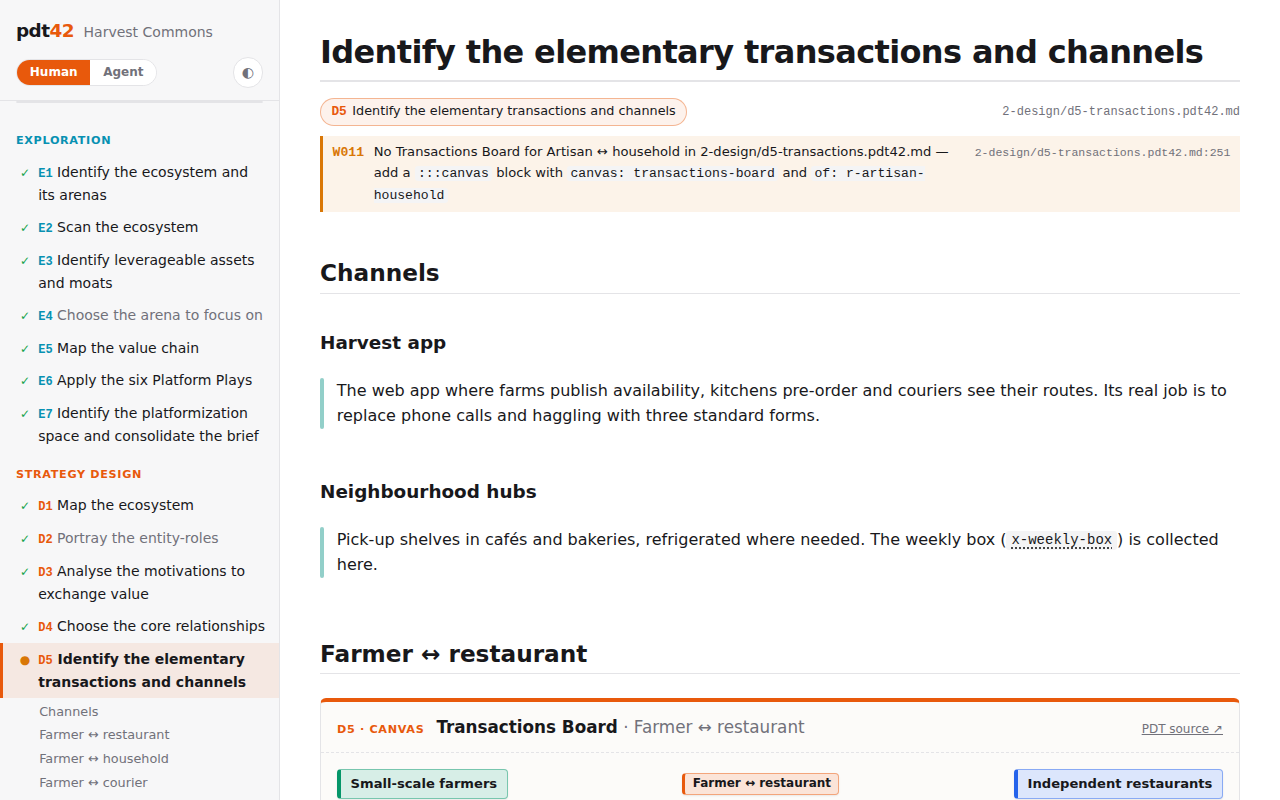
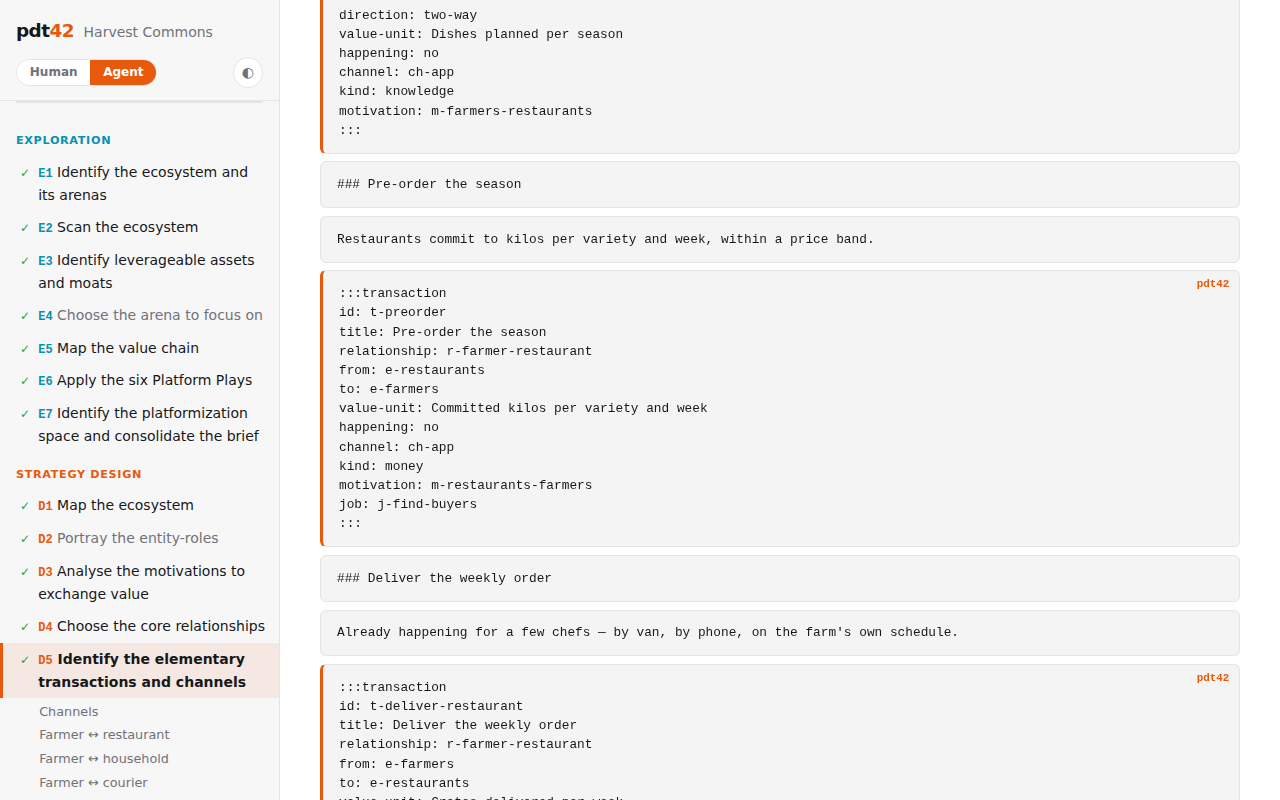
pdt42 lets you ideate and shape everything together with your agent — and keeps it consistent. The design lives in Markdown chapters with small typed blocks; the canvases are drawn from them, so they cannot disagree.